All Form Two Biology Chapters
- Chapter 1Nutrition in AnimalsRead below · Free
- Chapter 2Digestive SystemContinue in the app
- Chapter 3Transport of Materials in Living OrganismsContinue in the app
- Chapter 4Transport of Materials in Flowering PlantsContinue in the app
- Chapter 5Transport of Materials in MammalsContinue in the app
- Chapter 6Gas Exchange and RespirationContinue in the app
Chapter OneNutrition in Animals
Biology · Form Two · TIE / NECTA Competence-Based Syllabus
1Key Terms and Concepts
Learn these definitions first. Nearly every NECTA question on this topic rewards a precise definition.
Food is not the same as a nutrient. Food is any substance taken in for nourishment; a nutrient is the specific chemical component inside that food. Ugali is food; the starch inside it is the nutrient.
1. Define nutrition and state one reason why it is studied.
Nutrition is the study of the relationship between diet, health and diseases. It is studied so that people can select diets that keep them healthy and prevent diseases caused by nutrient imbalance.
2. Distinguish between autotrophic and heterotrophic nutrition.
Autotrophic nutrition: organisms manufacture their own food, e.g. green plants using photosynthesis.
Heterotrophic nutrition: organisms cannot manufacture their own food and depend on food already made by other organisms, e.g. all animals.
2Heterotrophic Nutrition
Heterotrophs are organisms that cannot make their own food. They rely on consuming other organisms or organic matter for energy and nutrients. All animals are heterotrophs.
2.1 Holozoic Nutrition
- Involves taking in complex food substances, digesting them, absorbing and assimilating the nutrients.
- Undigested food is egested as faeces.
- Found in most animals.
Three modes of holozoic feeding
| Mode | Description | Examples |
|---|---|---|
| Carnivorous | Feeds on other animals | Lions, tigers, leopards, driver ants |
| Herbivorous | Feeds on plants | Cattle, rabbits, goats, giraffes |
| Omnivorous | Feeds on both plants and animals | Humans, bears, pigs, chimpanzees |
Swipe the table sideways to see all columns.
2.2 Saprophytic Nutrition
- The organism feeds on decaying organic matter.
- Digestive enzymes are released outside the body onto the food — this is called extracellular digestion.
- Complex molecules (e.g. starch) are broken into simple molecules (e.g. glucose), which are then absorbed.
- Examples: mushrooms, bread mould.
2.3 Symbiotic Nutrition
A feeding relationship between two different species. There are three types:
| Type | Who benefits? | Example |
|---|---|---|
| Commensalism | One benefits; the other is neither harmed nor helped | Remora fish and shark; epiphytes growing on trees |
| Mutualism | Both species benefit | Bacteria in the gut of ruminants help digest cellulose |
| Parasitism | One benefits; the other is harmed | Tapeworm and human |
The cow that cannot digest grass
A cow chewing grass all day is not actually digesting the grass itself — no mammal on Earth makes the enzyme cellulase. What a cow really keeps in its rumen is a living fermentation tank holding tens of billions of bacteria and protozoa per millilitre. Those microbes digest the cellulose, and the cow digests the microbes. In other words, a cow is a herbivore that survives largely on a diet of its own bacteria. This is mutualism at its most spectacular — and it is why the same grass that fattens a Tanzanian Boran bull would starve a human being.
1. Why are omnivores regarded as opportunistic feeders?
Because they can feed on both plant and animal material, they are able to take whatever food is available in their environment at a given time. This flexibility means they are not restricted to one food source and can survive in many different habitats.
2. What is the role of enzymes in saprophytic nutrition?
Saprophytes secrete digestive enzymes onto the decaying substrate. The enzymes break complex organic molecules (such as starch and proteins) into simple soluble molecules (such as glucose and amino acids). This is extracellular digestion. The simple molecules are then absorbed into the body cells of the saprophyte.
3. Why are large forest trees not harmed by epiphytes growing on them?
Epiphytes only use the tree as a physical support to reach sunlight. They do not penetrate the tree's tissues and do not absorb food or water from the tree — they trap their own water and minerals from rain and air. The relationship is therefore commensalism, not parasitism.
3Classification of Nutrients
Nutrients are the chemical components of food that are essential to life and health. They are grouped by the quantity the body needs.
| Group | Amount needed | Energy value | Examples |
|---|---|---|---|
| Macronutrients | Large amounts | Contain calories (supply energy) | Proteins, carbohydrates, lipids |
| Micronutrients | Small amounts | Do not contain calories | Vitamins, minerals |
Small amount does not mean small importance. A person needs only a few milligrams of iodine in a whole year, but without it the thyroid gland fails and goitre develops. Micronutrients are needed in tiny quantities but their absence causes serious disease.
1. Give two differences between macronutrients and micronutrients.
- Macronutrients are required in large amounts; micronutrients are required in small amounts.
- Macronutrients supply energy (contain calories); micronutrients do not supply energy.
- Macronutrients are proteins, carbohydrates and lipids; micronutrients are vitamins and minerals.
4Proteins
4.1 Composition
- Organic compounds made of chains of amino acids.
- Elements: Carbon, Hydrogen, Oxygen, Nitrogen and Sulphur.
- Essential amino acids — must be obtained from food.
- Non-essential amino acids — can be manufactured by the body.
4.2 Sources
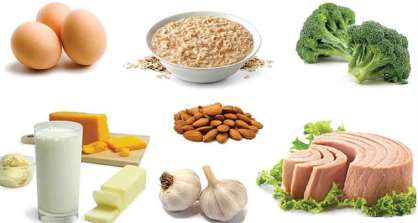
Beef, chicken, fish, termites, eggs, beans, lentils, peas, groundnuts, mushrooms, milk and cheese.
4.3 Functions
- Building body cells and promoting growth.
- Repairing damaged tissues.
- Making hormones and enzymes.
- Forming cell membranes.
- Aiding muscle contraction.
- Serving as a source of energy — 4 kcal per gram.
Protein is only used for energy as a last resort, when carbohydrates and lipids are unavailable. If a question asks for the main function of protein, the answer is growth and repair — not energy.
Nitrogen is what makes protein special
Look at the element list again: proteins are the only macronutrient that contains nitrogen. That single difference explains almost everything about protein. Because carbohydrates and fats have no nitrogen, the body cannot build muscle, enzymes, antibodies or haemoglobin out of them — no matter how much ugali a child eats. It is exactly why a child can eat until the stomach is full and still develop kwashiorkor. Full stomach, empty nitrogen supply.
1. Name the five elements found in proteins.
Carbon, Hydrogen, Oxygen, Nitrogen and Sulphur.
2. Differentiate between essential and non-essential amino acids.
Essential amino acids cannot be made by the body and must be supplied in the diet.
Non-essential amino acids can be synthesised by the body itself and so do not have to come from food.
3. State three plant sources of protein available in Tanzania.
Beans, lentils, peas, groundnuts and mushrooms (any three).
5Lipids (Fats and Oils)
5.1 Composition and Properties
- Organic compounds of Carbon, Hydrogen and Oxygen.
- Insoluble in water; soluble in organic solvents such as ether and benzene.
- Made of fatty acids and glycerol.
- Fats: solid at room temperature.
- Oils: liquid at room temperature.
5.2 Sources
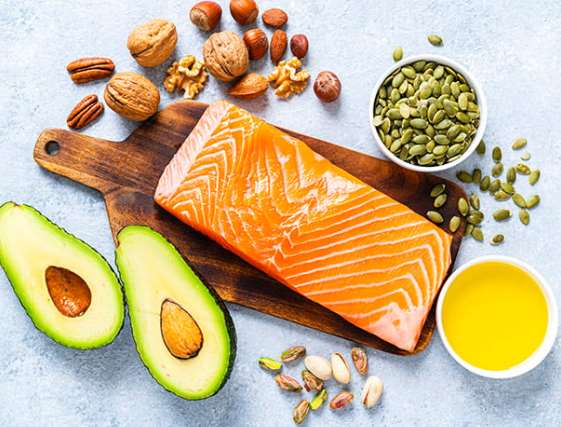
Oily fish, nuts, avocados, cooking oil, sunflower seeds, sesame seeds.
5.3 Functions
- Source of energy — 9 kcal per gram (the highest of all nutrients).
- Components of cell membranes.
- Protect body organs such as the heart and kidneys.
- Insulate the body against heat loss.
- Store the fat-soluble vitamins A, D, E and K.
- Regulate blood pressure and immune response.
Lipids give 9 kcal/g while carbohydrates and proteins give 4 kcal/g each. If asked "which nutrient provides the most energy per gram?", the answer is always lipids. Candidates who answer "carbohydrates" have confused most energy per gram with main source of energy.
1. Give one structural and one physical difference between fats and oils.
Fats are solid at room temperature while oils are liquid at room temperature. Both are lipids made of fatty acids and glycerol; the difference lies in the type of fatty acids present.
2. Explain why a person living in a very cold region benefits from a diet containing more lipids.
Lipids provide the highest energy per gram (9 kcal/g), which the body uses to generate heat. Stored fat under the skin also acts as an insulator, reducing heat loss from the body to the cold surroundings.
6Carbohydrates
6.1 Composition
- Organic compounds made of monosaccharides (simple sugars).
- Elements: Carbon, Hydrogen and Oxygen.
6.2 Types of Carbohydrates
| Type | Meaning | Examples | Reducing? |
|---|---|---|---|
| Monosaccharides | Single sugars | Glucose, fructose, galactose | Reducing sugars |
| Disaccharides | Double sugars | Sucrose, maltose, lactose | Maltose & lactose reduce; sucrose does not |
| Polysaccharides | Complex carbohydrates | Starch, glycogen, cellulose | Non-reducing |
6.3 Sources
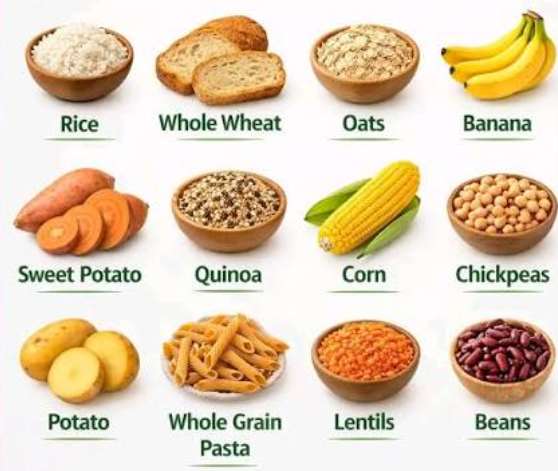
Maize, sweet potatoes, sugarcane, bananas, cassava, fruits, yams.
6.4 Functions
- Major source of energy — 4 kcal per gram.
- Essential for the proper functioning of the nervous system, heart and kidneys.
- Form genetic material (DNA and RNA).
- Excess is converted to glycogen (stored in the liver and muscles) or to fat.
Your brain is a glucose addict
The human brain is only about 2% of body mass, yet it consumes roughly 20% of all the glucose the body uses — and it cannot store any. That is why concentration drops within hours of skipping breakfast, and why students who eat before an examination often think more clearly. Interestingly, the brain can learn to run on ketones made from fat during long fasting, but it can never run on protein alone. Glucose remains its preferred fuel from birth to old age.
Students often write that "starch is stored in animals". Wrong. Plants store starch; animals store glycogen in the liver and muscles. Cellulose is a structural polysaccharide in plant cell walls — it is not a storage form at all.
1. Name the process by which two monosaccharides join to form a disaccharide.
Condensation (a condensation reaction), in which a molecule of water is removed as the two sugars join.
2. State two characteristics of polysaccharides.
- Insoluble in water.
- Tasteless (not sweet).
- Non-reducing sugars.
- Starch turns blue-black with iodine solution.
3. Where in the body is excess carbohydrate stored?
As glycogen in the liver and muscles, and as fat under the skin, in the lower abdomen and around the kidneys.
7Vitamins
- Complex organic micronutrients essential for body growth and survival.
- Fat-soluble: Vitamins A, D, E, K — these are stored in the body.
- Water-soluble: Vitamins B and C — not stored, and easily destroyed by heat.
Remember fat-soluble vitamins with the letters A D E K. Because they are stored, deficiency takes longer to appear — but excess can accumulate to harmful levels. Water-soluble vitamins must be supplied daily, which is why over-boiling vegetables (destroying vitamin C) is a real nutritional problem.
7.1 Vitamin Table
| Vitamin | Sources | Functions | Deficiency symptoms |
|---|---|---|---|
| A (Retinol) | Liver, milk, eggs, oranges, carrots, pumpkins | Formation of eye membranes and respiratory tract | Night blindness, increased risk of infections |
| B₁ (Thiamine) | Lean meat, liver, eggs, mushrooms, brown rice, whole grain cereals | Carbohydrate metabolism, muscle coordination | Beriberi — loss of appetite, muscle cramps, nerve disorder, heart failure |
| B₂ (Riboflavin) | Liver, meat, mushrooms, whole grain cereals | Metabolism of all foods, energy release | Cracks and sores around mouth and nose, visual problems |
| B₃ (Niacin) | Nuts, fish, meat, mushrooms, brown rice, whole grain cereals | Needed by many enzymes to convert food to energy | Pellagra — skin lesions, loss of appetite, diarrhoea, muscle weakness |
| B₆ (Pyridoxine) | Meat, vegetables, mushrooms, whole grain cereals | Protein metabolism | Nerve irritability, sores in mouth and eyes, anaemia |
| B₉ (Folic acid) | Liver, fish, green leafy vegetables, legumes, folate-fortified foods | Synthesis of new cells, carbohydrate metabolism | Birth defects, anaemia, frequent infections |
| B₁₂ (Cyanocobalamin) | Fish, meat, eggs, milk, liver | Making genetic material, forming red blood cells | Anaemia, nerve damage, weight loss |
| C (Ascorbic acid) | Tomatoes, green vegetables, citrus fruits | Antioxidant, improves iron absorption, collagen synthesis | Muscle weakness, easy bruising, joint pains, scurvy (bleeding gums), poor wound healing |
| D (Calciferol) | Egg yolk, milk, oily fish, sunlight, liver | Builds and maintains teeth and bones | Rickets in children; osteoporosis in adults |
| E (Tocopherol) | Corn and sunflower oil, butter, brown rice, peanuts | Antioxidant, prevents cell membrane damage | Nerve abnormalities, infertility |
| K | Green vegetables, liver | Normal blood clotting | Defective blood coagulation, excessive bleeding |
Swipe the table sideways to see all columns.
James Lind and the first clinical trial in history
In 1747, a Scottish naval surgeon named James Lind was watching sailors die of scurvy — a disease that killed more seamen than all sea battles combined. He divided twelve sick sailors into six pairs and gave each pair a different treatment: cider, vinegar, sea water, a spice paste, dilute sulphuric acid, and — for the last pair — two oranges and a lemon. Within six days the citrus pair was fit for duty. Lind had no idea vitamin C existed; it was not isolated until Albert Szent-Györgyi did so in the 1930s, work that won him a Nobel Prize. But Lind's simple comparison of treatment groups is now recognised as the ancestor of every controlled clinical trial performed in the world today.
1. Which vitamin is synthesised by the skin on exposure to sunlight, and what does it do?
Vitamin D (calciferol). It builds and maintains teeth and bones by enabling the body to absorb and use calcium and phosphorus. Its deficiency causes rickets in children and osteoporosis in adults.
2. A patient has bleeding gums and wounds that heal very slowly. Name the deficient vitamin and two foods you would recommend.
Vitamin C (ascorbic acid) — the condition is scurvy. Recommend citrus fruits such as oranges and lemons, tomatoes, and fresh green vegetables. The vegetables should be lightly cooked, since vitamin C is destroyed by heat.
3. Why should a pregnant woman take enough folic acid?
Folic acid lowers the risk of birth defects such as spina bifida — a spinal disorder in which there is a hole in the spine resulting from incomplete formation of the spinal cord and the bones of the spine. It is also needed for the synthesis of new cells in the rapidly growing foetus.
8Minerals
- Inorganic elements obtained from soil and water.
- Essential for enzyme activities, body fluid balance, bone development and hormone synthesis.
| Mineral | Sources | Functions | Deficiency symptoms |
|---|---|---|---|
| Calcium | Milk, yoghurt, cheese, sardines, eggs, green vegetables | Builds bones and teeth, nerve transmission, muscle contraction, blood clotting | Weak bones, bleeding, impaired nerve activity |
| Phosphorus | Meat, milk, fish, eggs, nuts | Builds bones and teeth, acid–base balance, genetic material formation | Poor bone and teeth formation |
| Potassium | Peanuts, bananas, orange juice, meat, green beans | Maintains fluid balance, nerve and muscle function | Poor muscle contraction, impaired nerve activity |
| Sodium | Table salt, soy sauce, milk, bread, vegetables | Nerve transmission, muscle contraction, protein making, fluid balance | Muscle cramps, poor nerve transmission |
| Chloride | Table salt, eggs, milk, meat, sea foods, whole grains | Water and ionic balance, forms HCl in the stomach | Poor digestion of proteins |
| Magnesium | Spinach, pumpkin seeds, sesame seeds, beans, nuts, sea foods | Healthy immune system, protein making, muscle contraction, nerve impulses | Muscle weakness, irregular heartbeat, weak bones |
| Iodine | Sea foods, dairy products, iodised table salt | Production of thyroid hormone for growth and metabolism | Goitre, growth retardation, mental retardation, still birth |
| Fluoride | Fish, fluorinated water, tea | Development of teeth and bones, prevents tooth decay | Poor bone and tooth development, tooth decay |
| Manganese | Plant foods, kidneys, liver, tea, coffee, nuts, fruits | Bone formation, enzyme activation (coenzyme) | Nausea, dizziness, hearing loss, bone mass loss |
| Copper | Whole grains, meat, fish, liver, legumes, nuts | Bone and haemoglobin synthesis, enzyme activation | Bleeding under the skin, easy rupturing of blood vessels, bone and joint problems, anaemia |
| Iron | Liver, lean meat, fish, chicken, egg yolk, legumes, green vegetables | Essential for haemoglobin (red pigment in blood), energy production | Anaemia |
| Zinc | Oysters, shrimp, crab, meat, fish, chicken, whole grains, vegetables | Healthy immune system, normal growth, enzyme activation, wound healing, taste detection | Impaired taste, poor immune response, skin problems |
Swipe the table sideways to see all columns.
A teaspoon of iodine for a whole lifetime
Over an entire human life, the total iodine a person needs amounts to roughly one teaspoon. Yet without it the thyroid gland swells into a goitre and, in an unborn child, brain development is permanently impaired. Tanzania's inland highlands — including parts of Kilimanjaro, Iringa and Kigoma — sit on soils naturally leached of iodine, which is exactly why the country made salt iodisation mandatory. It is one of the cheapest and most effective public-health measures ever devised: a few cents of iodine added per kilogram of salt protects the intelligence of an entire generation.
Do not confuse the two anaemias. Iron deficiency causes anaemia because haemoglobin cannot be made. Vitamin B₁₂ and folic acid deficiencies also cause anaemia, but because red blood cells cannot be properly formed. Read the question carefully for other clues such as nerve damage (B₁₂) or birth defects (folic acid).
1. Name two minerals needed for the formation of strong bones and teeth.
Calcium and phosphorus (fluoride also contributes to the development of teeth and bones and prevents tooth decay).
2. Explain why a person lacking chloride would digest proteins poorly.
Chloride is needed to form hydrochloric acid (HCl) in the stomach. HCl provides the acidic conditions required for the enzyme that digests protein to work. Without enough chloride, less HCl is produced and protein digestion is impaired.
9Roughage
- Dietary fibre obtained from indigestible plant parts.
- Has no nutritional value — it is neither digested nor absorbed.
Sources
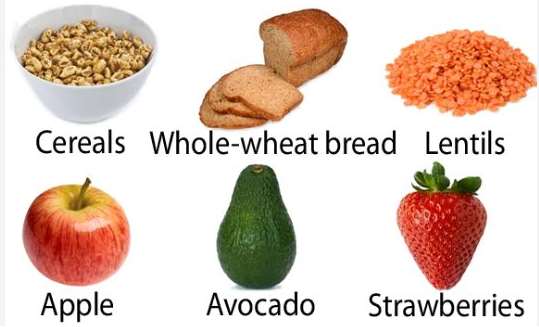
Cassava, potatoes, beans, fruits, cabbage, spinach, whole grain cereals.
Functions
- Aids the passage of food and faeces through the gut by assisting peristalsis.
- Helps control body weight.
- Protects against heart diseases.
Roughage is not a nutrient — it supplies no energy and is not absorbed. But it is an essential part of a balanced diet. A question asking "why is roughage important although it has no nutritional value?" wants the peristalsis answer, not an energy answer.
1. Explain how roughage helps prevent constipation.
Roughage adds bulk to the food in the alimentary canal. This bulk stimulates the muscles of the gut wall to contract and relax (peristalsis), pushing food and faeces along steadily so that waste is not held in the gut long enough to become hard and dry.
10Water
- Major constituent of body fluids — blood, tears and saliva.
- Forms a large part of the cell cytoplasm.
Functions
- Digestion — water is the medium in which food is broken down (hydrolysis).
- Lubricates moving body parts.
- Regulates body temperature through sweating.
- Maintains the shape of cells, tissues and organs.
Consequences of inadequate water
- Thirst, dehydration and constipation.
- Losing more than 10% of body water can lead to death.
You can survive weeks without food — but only days without water
Every chemical reaction that keeps you alive takes place in water. Digestion itself is a water reaction: the word hydrolysis literally means "splitting with water". This is why the body defends its water content so fiercely. A person can survive several weeks without food by burning stored fat and glycogen, but only a few days without water, because there is no water store to draw on. Sweating — the very mechanism that stops you overheating — is also the fastest way you lose it, which is why fluids must be replaced continuously in Tanzania's hot lowland regions.
1. Explain how sweating regulates body temperature.
When the body is hot, sweat glands release water onto the skin surface. As this water evaporates it takes latent heat from the body, cooling the skin and the blood flowing beneath it. This lowers the body temperature back to normal.
11Balanced Diet
A balanced diet is a meal containing foods from all food groups in the right proportions.
11.1 Components of a Balanced Diet
| Component | Approximate proportion |
|---|---|
| Carbohydrates | About 60% of the daily diet |
| Proteins | 10–35%, according to physiological needs |
| Fats | About 15% of daily caloric needs |
| Vitamins and minerals | Small but essential amounts |
| Water | Taken throughout the day |
11.2 Factors Leading to Lack of a Balanced Diet
- Limited access to nutritious food.
- Economic constraints.
- Poor dietary choices.
- Lack of knowledge about nutrition.
- Cultural and social influences.
- Time constraints.
- Health conditions.
- Psychological factors.
11.3 Healthy Lifestyle Recommendations
- Take the recommended amounts of proteins, fats, sugars and salts.
- Take the recommended amounts of fruits and vegetables.
- Eat a variety of foods including whole grains and roughage.
- Maintain an appropriate body weight (BMI 18.5–25.4).
- Do physical activities daily for 30–40 minutes.
- Replace red meat with fish, poultry or lean meat.
- Take low-fat dairy and low-salt foods.
- Limit sugary drinks and sweets.
- Avoid processed foods high in sugars, unhealthy fats and additives.
A balanced diet is not the same for everybody. Requirements change with age, sex, state of health and occupation. A pregnant woman, a farm labourer and an office clerk of the same age all need different diets.
1. Distinguish between a balanced diet and a nutritious diet.
A balanced diet contains foods from all food groups in the correct proportions — adequate carbohydrates, proteins, lipids, vitamins, minerals and water. A nutritious diet is food that supplies essential nutrients, but these may not necessarily be present in the correct proportions. Therefore all balanced diets are nutritious, but not all nutritious food makes a balanced diet.
2. Give three reasons why a family in a rural area might fail to eat a balanced diet.
Limited access to a variety of nutritious foods; economic constraints (cannot afford foods such as meat, fish or milk); lack of knowledge about nutrition; and cultural beliefs that restrict certain foods (any three).
12Nutritional Requirements for Different Groups
12.1 Pregnant Women and Lactating Mothers
They need a balanced diet for themselves and for the developing foetus or baby.
- Protein: builds muscles, breasts, uterus, blood supply and foetal tissues.
- Folic acid: lowers the risk of birth defects such as spina bifida.
- Calcium: develops the bones of the foetus or baby.
- Zinc: proper progression of labour, growth and development.
- Iron: meets increased blood supply needs; the foetus also stores iron for use after birth.
- Dietary fibre: reduces constipation.
- Water: the major constituent of breast milk.
- Avoid alcohol — it passes to the foetus during pregnancy and to the baby during breastfeeding.
12.2 Children
- Proteins: growth and development.
- Calcium: strong bones and teeth.
- Zinc: body growth, cell differentiation and metabolism.
- Vitamin B₁₂: red blood cell formation, brain development and cognitive function.
- Vitamin C: immunity and antioxidant action.
- Carbohydrates and lipids: energy for active children.
12.3 The Elderly
- Need vitamins, minerals and roughage.
- Iron: red blood cell formation.
- Zinc: healthy immune system and wound healing.
- Calcium and Vitamin D: strengthen bones, prevent osteoporosis, support mental health.
- Need foods that are easy to chew and swallow, e.g. eggs and liver instead of tough meat.
12.4 Sedentary Workers
- Office workers who remain in one place for long periods.
- At risk of obesity and non-communicable diseases such as diabetes and muscle or skeletal disorders.
- Recommendation: balance the diet with regular exercise; limit carbohydrates and lipids.
12.5 The Sick
- Need nutrients to recover health.
- Proper nutrition strengthens the immune system, helps fight infection and helps the body withstand medication.
- Avoid: excess caffeine, sugary foods, fried foods, spicy foods and alcohol.
- Increase: fruits (vitamins), vegetables (minerals) and water (replaces lost fluids).
The first 1,000 days
Nutrition scientists now speak of the "first 1,000 days" — from conception to a child's second birthday. During this window the brain grows faster than at any other time in life, forming roughly a million new neural connections every second. Nutrients missed in this period, particularly protein, iron, iodine and zinc, cause damage that later feeding cannot fully reverse. This is why a mother's diet during pregnancy is, quite literally, an investment in her child's future thinking. Tanzania's national nutrition programmes deliberately target this window.
1. Why does an elderly person need foods that are soft and easy to swallow?
The elderly often have weakened or missing teeth and reduced saliva production, which makes chewing and swallowing difficult. If only tough foods are offered they will avoid them, and this leads to deficiencies of protein, iron, zinc, calcium and vitamins. Soft foods such as eggs, liver, pureed fruits and vegetables allow them to obtain these nutrients.
2. State three nutrients a lactating mother especially needs and why.
- Protein — for milk production and repair of maternal tissues.
- Calcium — for the development of the baby's bones through breast milk.
- Water — it is the major constituent of breast milk.
- Iron — to restore blood lost during delivery (any three).
13Nutritional Deficiencies
13.1 Marasmus
Cause: lack of adequate amounts of food nutrients — general starvation.
Symptoms
- Weight loss.
- Slowed growth.
- Decreased activity and lack of energy.
- Wrinkled skin.
- Extreme hunger.
- Frequent crying.
Prevention: give the child adequate amounts of food containing all nutrients in the right proportions.
13.2 Kwashiorkor
Cause: protein deficiency.
Symptoms
- Extremely thin arms and legs.
- Poor growth.
- Swollen abdomen (enlarged liver).
- Reddish or yellowish, thin, weak hair.
- Weakened immunity.
- Diarrhoea, anaemia, dry skin that cracks easily.
- Oedema — excess fluid accumulation.
- Shortness of breath.
Prevention: provide a diet with adequate proteins and other nutrients.
The one symptom that separates the two diseases is oedema / swollen abdomen. A child who is skinny and swollen has kwashiorkor (protein deficiency). A child who is simply wasted, wrinkled and constantly hungry has marasmus (total starvation). Remember: marasmus = too little food; kwashiorkor = too little protein.
13.3 Rickets
Cause: lack of Vitamin D, phosphorus and calcium.
Symptoms
- Skeletal deformities — bow legs, knock knees, odd-shaped skull, deformed spine.
- Bone pain; weakened or delayed teeth formation.
- Weak muscles and easily fractured bones.
- Slow growth.
- Muscle spasms and cramps.
Prevention
- Increase Vitamin D, phosphorus and calcium in the diet.
- Ensure exposure to sufficient sunlight.
- Provide milk, sardines and green vegetables.
The disease that industrialisation created — and sunshine cured
Rickets exploded across nineteenth-century European cities. Factory smoke so thickened the air over Manchester and Glasgow that children rarely saw direct sunlight, and their bones bent under their own weight. In 1919 a Berlin physician, Kurt Huldschinsky, tried something unusual: he placed rachitic children under an ultraviolet lamp. Their bones hardened. Soon afterwards Edward Mellanby and Elmer McCollum identified the missing dietary factor and named it vitamin D. It remains the only vitamin the human body can manufacture for itself — from cholesterol in the skin, using nothing but sunlight. Tanzanian children, living close to the equator, have a natural advantage most of the world does not.
1. A three-year-old has thin limbs, a swollen belly and reddish thin hair. Name the condition and give two foods you would recommend.
The condition is kwashiorkor, caused by protein deficiency. Recommend protein-rich foods such as beans, groundnuts, eggs, fish, milk or chicken. The parents should also be advised to seek medical attention.
2. Explain why rickets is described as a disease of both diet and lifestyle.
It results from a dietary lack of vitamin D, calcium and phosphorus, but also from a lifestyle with insufficient exposure to sunlight, since the skin manufactures vitamin D when exposed to sunlight. A child could eat some calcium-containing food and still develop rickets if kept indoors, because without vitamin D the calcium cannot be properly absorbed and deposited in bone.
14Nutritional Disorders and BMI
14.1 Obesity
Characteristic: excess body fat leading to overweight.
Causes
- Overeating.
- Inactivity.
- Eating high amounts of energy foods (fats and sugars).
- Frequent eating.
- Genetic makeup.
Effects
- Shortness of breath and snoring.
- High blood pressure, heart disease, stroke and diabetes.
- Certain cancers, arthritis and respiratory problems.
Prevention
- Eat properly and exercise regularly.
- Balance calorie intake with physical activity.
- Limit fatty foods (butter, fatty meat, chips, sausages) and sugary foods (sweets, cakes, chocolates).
14.2 Body Mass Index (BMI)
| BMI (kg/m²) | Body condition |
|---|---|
| Below 18.5 | Underweight |
| 18.5 – 25.4 | Normal weight |
| 25.5 – 29.4 | Overweight / pre-obese |
| 29.5 – 34.9 | Class 1 obesity |
| 35.0 – 39.9 | Class 2 obesity |
| 40 and above | Class 3 obesity (extreme / severe) |
Height in the BMI formula must be in metres, not centimetres. A candidate given a height of 150 cm must first convert to 1.5 m before squaring. Forgetting this conversion is the single most frequent error in BMI calculations.
14.3 Anorexia Nervosa
- A self-starvation syndrome.
- Intentional refusal to eat enough food.
- Severe loss of body mass.
Symptoms
- Muscle wasting, including the heart muscle.
- Excessive loss of body mass.
- Extreme fear of being fat.
- Distorted body image.
14.4 Bulimia Nervosa
- Excessive eating followed by attempts to remove the food from the body.
Symptoms
- Body mass often appears normal.
- The person keeps the eating behaviour secret.
- Difficult to detect.
Causes of anorexia and bulimia
- Underlying psychological causes — depression, low self-esteem, bottled-up emotions.
- Pressure to fit contemporary standards of beauty.
Effects
- Heart problems arising from weakened cardiac muscle.
- Impaired mental function.
- Dehydration.
- Damage to the gums and erosion of the teeth.
- Anaemia, stomach ulcers and abdominal cramping.
- Irregular or absent menstrual periods.
- Dry skin.
Prevention and management
- Address the underlying psychological problems.
- Seek help from a qualified medical practitioner.
- Follow the necessary lifestyle and dietary changes advised.
Anorexia nervosa and bulimia nervosa are recognised medical illnesses, not choices or matters of willpower, and they are among the most serious conditions in this chapter. They are also treatable, and recovery is far more likely when help is sought early. If you or a classmate is struggling with eating, body image, or feelings of worthlessness, please speak to a parent, a teacher, the school matron or a health worker at your nearest clinic. Asking for help is a sign of strength, not weakness.
1. Dina has a mass of 70 kg and a height of 150 cm. Calculate her BMI and classify her body condition.
Height = 150 cm = 1.5 m
BMI = 70 ÷ (1.5)² = 70 ÷ 2.25 = 31.1 kg/m²
A BMI of 31.1 falls in the range 29.5–34.9, so Dina is in Class 1 obesity.
2. Why is bulimia nervosa described as difficult to detect?
Because the person's body mass usually remains within the normal range, so there is no obvious outward sign of the disorder. In addition, the person deliberately keeps the eating behaviour secret from family and friends.
15Food Tests
Food tests are practical work — NECTA sets them in both theory and practical papers. Learn the reagent, the procedure, and the exact colour change for each.
15.1 Test for Reducing Sugars (Benedict's Test)
- Monosaccharides and some disaccharides (maltose, lactose) are reducing sugars.
- Reagent: Benedict's solution.
- Procedure: add Benedict's solution to the food sample and heat gently.
- Colour changes: Blue → Green → Yellow → Orange → Brick red.
- Positive result: orange / brick red precipitate.
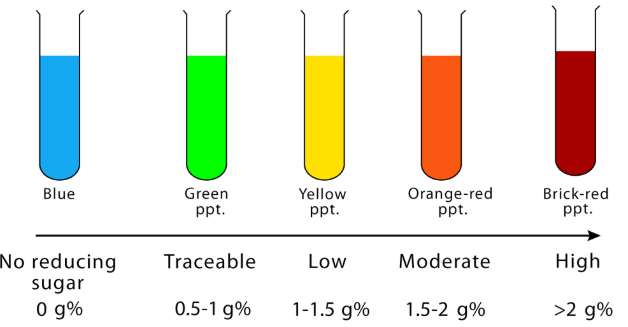
- Grind the onion and filter to obtain a solution.
- Add Benedict's solution to 2 ml of the solution.
- Heat gently for 2–3 minutes.
- Observe the colour change series.
15.2 Test for Non-reducing Sugars (Sucrose)
Sucrose is a non-reducing sugar, so it must first be hydrolysed.
- Add dilute HCl to the sucrose solution.
- Heat to hydrolyse sucrose into glucose + fructose.
- Cool and neutralise with NaOH or NaHCO₃.
- Add Benedict's solution and heat.
Positive result: orange / brick red precipitate.
The neutralisation step must not be omitted. Benedict's solution only works in alkaline conditions; if the acid is still present the test will give a false negative even when sugar is there. Many marks are lost by candidates who write the procedure but leave out "cool and neutralise".
Test a sugarcane sample using dilute HCl followed by Benedict's solution.
15.3 Test for Starch (Iodine Test)
- Reagent: iodine solution.
- Procedure: add 2–3 drops of iodine solution to the food sample.
- Positive result: blue-black colour.
Add iodine solution to a freshly cut surface of Irish potato and record the colour.
15.4 Tests for Lipids
(a) Grease spot test
- Procedure: rub the food on white paper and expose it to light.
- Positive result: a translucent spot on the paper.
(b) Sudan III test
- Reagent: Sudan III.
- Procedure: add Sudan III to the food sample, shake, and allow it to settle.
- Positive result: a red layer on top, with the water below remaining clear.
(c) Emulsion test
- Positive result: a white milky suspension (emulsion).
Properties of lipids
- Insoluble in water.
- Dissolve in organic solvents — ether, chloroform, acetone.
- Form an emulsion when mixed with water.
- Leave a translucent mark on paper.
- React with osmic acid and stain black.
15.5 Test for Proteins (Biuret Test)
- Reagents: 1M NaOH + 1% CuSO₄.
- Procedure: add NaOH, then add CuSO₄ drop by drop while shaking.
- Positive result: violet / purple colour.
- Mix egg white with water.
- Add 2 ml of 1M NaOH.
- Add 1% CuSO₄ drop by drop while shaking.
- Observe the purple / violet colour.
Properties of proteins (Activity 1.9)
- Insoluble in water.
- Coagulate on heating — this is denaturation.
- React with Biuret reagent (NaOH + CuSO₄) to give a violet / purple colour.
15.6 Food Test Summary
| Test | Reagent | Positive result | Nutrient tested |
|---|---|---|---|
| Benedict's test | Benedict's solution + heat | Brick red precipitate | Reducing sugars |
| Iodine test | Iodine solution | Blue-black colour | Starch |
| Biuret test | NaOH + CuSO₄ | Violet / purple colour | Proteins |
| Sudan III test | Sudan III | Red layer on top | Lipids |
| Grease spot test | None (white paper) | Translucent spot | Lipids |
| Emulsion test | Ethanol then water | White milky suspension | Lipids |
Why the sugar test changes colour — and why diabetics once relied on it
Benedict's solution contains blue copper(II) ions. A reducing sugar donates electrons to them, converting Cu²⁺ into brick-red copper(I) oxide, which drops out of solution as a precipitate. The more sugar present, the more precipitate — which is why the colour ladder in Figure 1.5 doubles as a rough measurement. Before electronic glucose meters existed, people with diabetes tested their own urine using exactly this reaction on a tablet, reading their sugar level off a colour chart. Stanley Benedict published the modified formula in 1909; a century later, the same copper chemistry is still what your school laboratory relies on.
1. Complete the table below.
| Test | Observation | Inference |
|---|---|---|
| Biuret test | — | — |
| Emulsion test | — | — |
| Benedict's solution | — | — |
| Iodine solution | — | — |
| Test | Observation | Inference |
|---|---|---|
| Biuret test | Purple / violet colour | Protein present |
| Emulsion test | White milky suspension | Lipid present |
| Benedict's solution | Brick red precipitate | Reducing sugar present |
| Iodine solution | Blue-black colour | Starch present |
2. In the non-reducing sugar test, what is the purpose of the hydrochloric acid?
The acid hydrolyses the non-reducing sugar (sucrose) into its two reducing monosaccharides, glucose and fructose. These can then react with Benedict's solution and give a positive result.
3. A student heats egg white and it turns solid and white. Name and explain this change.
The change is coagulation, caused by denaturation. Heat breaks the bonds holding the protein molecule in its specific three-dimensional shape, so the molecule unfolds and the protein becomes insoluble and solid. Denaturation is irreversible.
16Student Activities
These are the practical activities prescribed for this chapter. Record your observations in your practical notebook.
Classify food items according to nutrients. Collect and group food items — eggs, maize, beans, carrots, potatoes, sunflower seeds, groundnuts, vegetables, tomatoes — by nutrient type.
Plan a balanced diet. Plan menus for different groups: pregnant women, lactating mothers, children, the elderly, sedentary workers and sick people.
Investigate nutritional deficiencies and disorders. Visit a local health centre and discuss common nutritional problems with the health personnel.
Test for reducing sugars. Test an onion sample with Benedict's solution.
Test for non-reducing sugars. Test a sugarcane sample with HCl followed by Benedict's solution.
Test for starch. Test Irish potato with iodine solution.
Investigate starch solubility. Test flour in water and observe the effect of boiling.
Grease spot test. Test groundnuts on white paper.
Sudan III test. Test cooking oil with Sudan III reagent.
Biuret test. Test egg white with NaOH + CuSO₄.
Solubility and heat effects on proteins. Test egg white solubility and heat coagulation.
17Exercise 1.1
Attempt each question first, then tap the button to check your answer.
1. Using relevant examples, briefly explain the following types of heterotrophic nutrition: (i) holozoic, (ii) saprophytic, (iii) symbiotic.
(i) Holozoic nutrition: the organism takes in complex food, digests it internally, absorbs the nutrients and assimilates them; undigested material is egested. Example: a lion feeding on a zebra, or a human eating ugali and beans.
(ii) Saprophytic nutrition: the organism feeds on decaying organic matter by secreting enzymes onto it (extracellular digestion) and absorbing the simple products. Example: mushrooms and bread mould.
(iii) Symbiotic nutrition: a feeding relationship between two species in which one or both benefit. Example: mutualism between a cow and the cellulose-digesting bacteria in its rumen.
2. Why are omnivores regarded as opportunistic feeders?
They can eat both plant and animal material, so they take advantage of whatever food happens to be available. This allows them to survive in a wide range of habitats and through seasons when one type of food is scarce.
3. What is the role of enzymes in the saprophytic mode of feeding?
Enzymes are secreted onto the decaying substrate where they break down complex organic molecules such as starch and protein into simple soluble molecules such as glucose and amino acids. This is extracellular digestion. The simple molecules are then absorbed into the body cells and used for growth, respiration and other activities.
4. Why are large trees in the forest not harmed by the epiphytes that grow on their bodies?
Epiphytes use the tree only as physical support to reach sunlight. They do not penetrate the tree's tissues and do not draw food or water from it; they obtain their own water and minerals from rain and air. The tree is therefore neither harmed nor benefited — the relationship is commensalism.
5. Explain the meaning of: (i) commensalism, (ii) parasitism, (iii) mutualism.
(i) Commensalism: a relationship in which one species benefits while the other is neither harmed nor benefited, e.g. remora fish and shark.
(ii) Parasitism: a relationship in which one species benefits while the other is harmed, e.g. tapeworm in the human gut.
(iii) Mutualism: a relationship in which both species benefit, e.g. cellulose-digesting bacteria in the gut of ruminants.
6. How would you apply the concept of nutrition to improve your diet?
- Include foods from all food groups in the right proportions at every meal.
- Increase fruits and vegetables for vitamins and minerals.
- Include protein foods such as beans, groundnuts, eggs and fish for growth and repair.
- Include whole grains for roughage, and drink enough water.
- Limit sugary drinks, fried foods and excessive salt.
- Combine the diet with 30–40 minutes of daily physical activity.
7. What would happen to heterotrophs if there were no autotrophs?
Autotrophs are the producers that trap solar energy and manufacture food; they form the base of every food chain. Without them there would be no source of organic food and no oxygen from photosynthesis. Herbivores would starve first, then the carnivores that depend on them, and eventually all heterotrophs would die. Life as we know it would collapse.
8. Why is proper nutrition essential for maintaining health?
Proper nutrition supplies energy for body activities, materials for growth and repair of tissues, and the vitamins and minerals needed for enzyme action, bone formation and immunity. It protects against deficiency diseases such as kwashiorkor, rickets and scurvy, and against disorders such as obesity and diabetes. It also strengthens the immune system so the body can resist infection and recover from illness.
9. Why are human beings, pigs and bears regarded as omnivorous animals?
Because they feed on both plant and animal material. Their teeth are adapted for a mixed diet — they possess incisors and canines for cutting and tearing flesh as well as premolars and molars for grinding plant material — and their digestive systems can handle both types of food.
18End of Topic Questions
Attempt all questions on your own first. The full suggested answers are given in Section 19.
Section A: Multiple Choice Questions (20 marks)
Choose the most correct answer for each of the following.
1. Which of the following is a characteristic of heterotrophic nutrition?
- A. Organisms make their own food
- B. Organisms depend on food made by other organisms
- C. Organisms use sunlight to make food
- D. Organisms only feed on plants
2. A tapeworm living in the human gut is an example of:
- A. Commensalism
- B. Mutualism
- C. Parasitism
- D. Saprophytism
3. Which nutrient provides the most energy per gram?
- A. Carbohydrates
- B. Proteins
- C. Lipids
- D. Vitamins
4. The deficiency of Vitamin C causes:
- A. Beriberi
- B. Scurvy
- C. Rickets
- D. Pellagra
5. Which mineral is essential for the formation of haemoglobin?
- A. Calcium
- B. Iron
- C. Iodine
- D. Zinc
6. Kwashiorkor is caused by a deficiency of:
- A. Carbohydrates
- B. Lipids
- C. Proteins
- D. Vitamins
7. A person with a BMI of 32 kg/m² is classified as:
- A. Normal weight
- B. Overweight
- C. Class 1 obesity
- D. Class 2 obesity
8. Which of the following is a fat-soluble vitamin?
- A. Vitamin B₁
- B. Vitamin C
- C. Vitamin D
- D. Vitamin B₁₂
9. The final colour observed in a positive Benedict's test for reducing sugar is:
- A. Blue
- B. Green
- C. Yellow
- D. Brick red
10. Bacteria in the gut of cows that help digest cellulose represent:
- A. Commensalism
- B. Mutualism
- C. Parasitism
- D. Saprophytism
11. Which nutrient is NOT a source of energy?
- A. Carbohydrates
- B. Lipids
- C. Proteins
- D. Vitamins
12. The Biuret test is used to identify the presence of:
- A. Proteins
- B. Lipids
- C. Reducing sugars
- D. Starch
13. Which of the following is a symptom of kwashiorkor?
- A. Wrinkled skin
- B. Swollen abdomen
- C. Bow legs
- D. Excessive hunger
14. Roughage is important for:
- A. Providing energy
- B. Building body tissues
- C. Aiding peristaltic movement
- D. Forming cell membranes
15. An animal that feeds on both plants and animals is called:
- A. Carnivore
- B. Herbivore
- C. Omnivore
- D. Saprophyte
16. Which vitamin is synthesised by the body when exposed to sunlight?
- A. Vitamin A
- B. Vitamin C
- C. Vitamin D
- D. Vitamin E
17. The deficiency of iodine causes:
- A. Anaemia
- B. Goitre
- C. Rickets
- D. Scurvy
18. Which enzyme is produced by bacteria in the gut of ruminants to digest cellulose?
- A. Protease
- B. Lipase
- C. Amylase
- D. Cellulase
19. The storage form of carbohydrates in animals is:
- A. Starch
- B. Glycogen
- C. Cellulose
- D. Glucose
20. Anorexia nervosa is characterised by:
- A. Excessive eating followed by vomiting
- B. Intentional refusal to eat enough food
- C. Excess body fat
- D. Swollen abdomen
Section B: Matching Items (5 marks)
Match each statement in Column A with its corresponding item in Column B.
| Column A | Column B |
|---|---|
| (i) A chart depicting the recommended amounts from different food groups that nutritionists consider as healthy eating | A. Malnutrition B. Protein C. Carbohydrate D. Roughage E. Vitamins |
| (ii) Chemical components of foods | F. Food guide pyramid G. Nutrients H. Marasmus |
| (iii) A substance that is important in the diet, but which cannot be digested and absorbed by human beings | I. Micronutrient J. Kwashiorkor |
| (iv) Poor nutrition resulting from insufficient or poor diet or from defective digestion | |
| (v) An organic compound composed of carbon, hydrogen and oxygen and is the main source of energy |
Section C: Structured Questions
- Differentiate between the following terms: (a) food and nutrient; (b) kwashiorkor and marasmus; (c) macronutrients and micronutrients; (d) monosaccharides and polysaccharides; (e) oils and fats.
- Dina has a mass of 70 kg and a height of 150 cm. (a) What is her BMI? (b) What risk is Dina facing? (c) What advice will you give to Dina, and why?
- A three-year-old child has the following symptoms: very weak, cries and eats a lot, persistent diarrhoea, skinny with extremely thin arms and legs, swollen belly, wrinkled skin, yellowish very thin hair. (a) What nutritional disorder is the child suffering from? (b) What advice would you give to the child's parents?
- What are the special nutritional needs of the following people? (a) a 65-year-old person; (b) a 4-year-old child; (c) a pregnant woman; (d) a breastfeeding mother.
- (a) What are the main groups of vitamins? Give two examples of each. (b) Name the forms in which excess carbohydrates are stored in animals and in plants. (c) Where in the body can excess carbohydrates be stored?
- (a) Name the process by which a monosaccharide is converted into a disaccharide. (b) Give two characteristics of monosaccharides. (c) How would you test for a monosaccharide? (d) When testing for a non-reducing sugar, the sample is mixed with hydrochloric acid. What is the use of the acid?
- (a) What are polysaccharides? Give two examples. (b) Give two characteristics of polysaccharides.
- (a) Explain briefly how you would carry out: (i) a test for proteins; (ii) a test for starch. (b) Which food substances are tested by: (i) the Biuret test; (ii) the grease spot test; (iii) the Sudan III test?
- Fill the gaps in the table below to show that the test is positive for the type of food being tested: Biuret test, emulsion, Benedict's solution, iodine solution.
- Imagine a teenager who primarily consumes fast food and sugary drinks. (a) What potential nutritional deficiencies might arise? (b) How could these deficiencies affect physical and mental development?
- Consider an elderly person who has difficulty chewing and swallowing. (a) How might this affect nutrient intake? (b) What strategies could ensure they receive essential vitamins and minerals?
- A child is diagnosed with kwashiorkor. (a) What nutrients might have been lacking? (b) How can these nutrients be obtained from alternative food sources?
- A professional athlete experiences fatigue and poor performance despite strict training. (a) What nutritional factors could contribute? (b) How might the diet be adjusted to enhance energy and recovery?
- Explain the difference between a balanced diet and a nutritious diet.
- What are the symptoms and prevention of marasmus?
- Describe the role of enzymes in saprophytic nutrition.
- Explain why pregnant women need to take folic acid.
- What is the significance of roughage in the diet?
- Compare and contrast the Biuret test and the Benedict's test.
- Why are children and the elderly at higher risk of nutritional deficiencies?
- Explain the concept of BMI and its significance in health assessment.
- What is the difference between anorexia nervosa and bulimia nervosa?
- Why is water considered an essential nutrient?
- What are the effects of obesity on health?
- Explain how carbohydrates are classified and give examples of each type.
Section D: Essay Questions
- Discuss the importance of a balanced diet for different groups of people in society. Include the specific nutritional needs of pregnant women, children, the elderly and sedentary workers, and explain the consequences of failing to meet these needs.
- Describe the methods used to test for the presence of carbohydrates, proteins and lipids in food samples. Explain the principle behind each test and give the expected results for positive and negative outcomes.
- Analyse the causes, symptoms and prevention of the major nutritional deficiencies and disorders, including marasmus, kwashiorkor, rickets, obesity, anorexia nervosa and bulimia nervosa. Discuss the role of nutrition in maintaining overall health and well-being.
19Suggested Answers
Answers to the End of Topic Questions in Section 18. Attempt the questions before revealing each answer.
Section A: Multiple Choice — Answer Key
Tap to reveal the answer key for questions 1–20.
| Q | Ans | Q | Ans | Q | Ans | Q | Ans |
|---|---|---|---|---|---|---|---|
| 1 | B | 6 | C | 11 | D | 16 | C |
| 2 | C | 7 | C | 12 | A | 17 | B |
| 3 | C | 8 | C | 13 | B | 18 | D |
| 4 | B | 9 | D | 14 | C | 19 | B |
| 5 | B | 10 | B | 15 | C | 20 | B |
Section B: Matching Items
Tap to reveal the answers for (i) to (v).
- (i) → F — Food guide pyramid
- (ii) → G — Nutrients
- (iii) → D — Roughage
- (iv) → A — Malnutrition
- (v) → C — Carbohydrate
Section C: Structured Questions
1. Differentiate between the given terms.
(a) Food vs nutrient: Food is any substance consumed for nourishment; nutrients are the specific chemical components of food that are essential for life.
(b) Kwashiorkor vs marasmus: Kwashiorkor is protein deficiency accompanied by oedema and a swollen abdomen; marasmus is general starvation characterised by extreme thinness and wrinkled skin.
(c) Macronutrients vs micronutrients: Macronutrients are needed in large amounts (proteins, carbohydrates, lipids); micronutrients are needed in small amounts (vitamins, minerals).
(d) Monosaccharides vs polysaccharides: Monosaccharides are single sugars such as glucose; polysaccharides are complex carbohydrates made of many monosaccharide units, such as starch.
(e) Oils vs fats: Oils are liquid at room temperature; fats are solid at room temperature.
2. Dina: 70 kg, 150 cm.
(a) BMI = 70 ÷ (1.5)² = 70 ÷ 2.25 = 31.1 kg/m².
(b) This falls in the Class 1 obesity range. Dina is at risk of heart disease, high blood pressure, diabetes, stroke and arthritis.
(c) She should eat properly, exercise regularly, avoid fatty and sugary foods, and balance her calorie intake with physical activity — because reducing excess body fat lowers the risk of these non-communicable diseases.
3. Three-year-old with swollen belly and thin limbs.
(a) Kwashiorkor — protein deficiency.
(b) Provide a diet with adequate proteins and other nutrients; include meat, fish, eggs, beans, groundnuts and milk in the child's diet; and seek medical advice at the nearest health centre.
4. Special nutritional needs of four groups.
(a) Elderly: vitamins, minerals (iron, zinc, calcium), vitamin D and roughage; foods that are easy to chew and swallow.
(b) Child: proteins for growth, calcium for bones and teeth, zinc, vitamins B₁₂ and C for immunity and brain development, carbohydrates and lipids for energy.
(c) Pregnant woman: protein, folic acid, calcium, zinc, iron, dietary fibre and water; alcohol must be avoided.
(d) Breastfeeding mother: the same as a pregnant woman, with extra water for milk production.
5. Vitamin groups and carbohydrate storage.
(a) Fat-soluble — vitamins A and D (also E and K); water-soluble — vitamins B and C.
(b) Animals store excess carbohydrate as glycogen; plants store it as starch.
(c) In the liver and muscles (as glycogen), and in the lower abdomen, around the kidneys and under the skin (as fat).
6. Monosaccharides and the acid in the non-reducing sugar test.
(a) Condensation reaction.
(b) They are soluble in water, sweet in taste, and are reducing sugars.
(c) Add Benedict's solution and heat gently; a colour change to brick red indicates a positive result.
(d) The acid hydrolyses the non-reducing sugar (sucrose) into the reducing sugars glucose and fructose, so that Benedict's solution can then react with them.
7. Polysaccharides.
(a) Polysaccharides are complex carbohydrates formed by the condensation of many monosaccharide units. Examples: starch, glycogen and cellulose.
(b) They are insoluble in water and tasteless (not sweet). They are also non-reducing, and starch gives a blue-black colour with iodine.
8. Food test procedures.
(a)(i) Proteins: add 1M NaOH to the sample, then add 1% CuSO₄ drop by drop while shaking; a purple/violet colour shows protein is present.
(a)(ii) Starch: add 2–3 drops of iodine solution to the sample; a blue-black colour shows starch is present.
(b)(i) Proteins. (ii) Lipids. (iii) Lipids.
9. Complete the food test table.
| Test | Observation | Inference |
|---|---|---|
| Biuret test | Purple / violet colour | Protein present |
| Emulsion | White milky suspension | Lipid present |
| Benedict's solution | Brick red precipitate | Reducing sugar present |
| Iodine solution | Blue-black colour | Starch present |
10. Teenager living on fast food and sugary drinks.
(a) Likely deficiencies: vitamins (A, C and the B complex), minerals (calcium, iron, zinc), roughage and good-quality protein.
(b) Effects: poor growth, weak bones from calcium deficiency, anaemia from iron deficiency, impaired brain function and concentration from B-vitamin deficiency, obesity from excess calories, constipation from lack of roughage, and a weakened immune system.
11. Elderly person with chewing and swallowing difficulty.
(a) They cannot eat tough foods, so they may avoid fruits, vegetables and meat. This reduces protein intake and leads to poor vitamin and mineral supply and absorption.
(b) Strategies: eat soft foods such as eggs and liver; take pureed fruits and vegetables; use ground meats, soups and smoothies; take fortified cereals and, where advised, liquid nutritional supplements.
12. Child diagnosed with kwashiorkor.
(a) Mainly proteins; the child may also be lacking vitamins and minerals.
(b) Affordable alternative sources include beans, lentils, peas, groundnuts, eggs, fish, milk and chicken; soya products and mushrooms can also be used.
13. Athlete with fatigue despite strict training.
(a) Possible factors: inadequate carbohydrate intake (low energy stores), insufficient iron leading to anaemia, dehydration, and a lack of protein for muscle repair.
(b) Adjustments: increase carbohydrates for energy, increase iron-rich foods such as meat, liver and green vegetables, maintain proper hydration, take adequate protein for muscle repair, and ensure sufficient vitamins B and C.
14. Balanced diet vs nutritious diet.
A balanced diet contains foods from all food groups in the right proportions — adequate carbohydrates, proteins, lipids, vitamins, minerals and water. A nutritious diet refers generally to food that provides essential nutrients, but these may not be present in the correct proportions.
15. Symptoms and prevention of marasmus.
Symptoms: weight loss, slowed growth, decreased activity and lack of energy, wrinkled skin, extreme hunger and frequent crying.
Prevention: give the child adequate amounts of food containing all the nutrients in the right proportions.
16. Role of enzymes in saprophytic nutrition.
Saprophytes release digestive enzymes externally onto the substrate. These enzymes convert complex organic molecules such as starch into simple molecules such as glucose. This process is called extracellular digestion. The simple molecules are then absorbed by the body cells and used for the organism's various activities.
17. Why pregnant women need folic acid.
Folic acid lowers the risk of birth defects such as spina bifida, a spinal disorder characterised by a hole in the spine resulting from incomplete formation of the spinal cord and the bones of the spine.
18. Significance of roughage.
Roughage has no nutritional value but helps in the passage of food and faeces through the gut by aiding peristaltic movement. It also helps control body weight and protects against diseases such as heart disease.
19. Compare the Biuret test and Benedict's test.
Biuret test: tests for proteins; uses NaOH and CuSO₄; no heating required; positive result is a purple/violet colour.
Benedict's test: tests for reducing sugars; uses Benedict's solution with heating; positive result is a brick red precipitate.
Similarity: both are colour-change tests using copper compounds to identify a specific nutrient in a food sample.
20. Why children and the elderly are at higher risk of deficiencies.
Children are actively growing and require more nutrients per unit of body mass for development; an inadequate supply leads to stunted growth and deficiency diseases.
The elderly have weakened teeth, reduced saliva production and decreased nutrient absorption. They may therefore avoid certain foods, leading to deficiencies of iron, zinc, calcium and vitamins.
21. The concept of BMI and its significance.
BMI (Body Mass Index) is a measure relating body weight to height, calculated as weight in kilograms divided by the square of height in metres. It helps to assess whether a person is underweight, of normal weight, overweight or obese, and therefore indicates the health risks associated with that weight status.
22. Anorexia nervosa vs bulimia nervosa.
Anorexia nervosa involves the intentional refusal to eat enough food, leading to severe loss of body mass, an extreme fear of being fat and a distorted body image.
Bulimia nervosa involves excessive eating followed by attempts to remove the food from the body. Body mass often remains normal and the behaviour is kept secret, which makes the condition difficult to detect. Both are serious medical conditions requiring professional treatment.
23. Why water is an essential nutrient.
Water is the major constituent of body fluids such as blood, tears and saliva, and forms a large part of the cell cytoplasm. It is needed for digestion, lubricates moving body parts, regulates body temperature through sweating, and maintains the shape of cells, tissues and organs.
24. Effects of obesity on health.
Obesity leads to shortness of breath and snoring, and increases the likelihood of high blood pressure, heart disease, stroke, diabetes, certain cancers, arthritis and respiratory problems.
25. Classification of carbohydrates.
Monosaccharides: single sugars — glucose, fructose, galactose; these are reducing sugars.
Disaccharides: double sugars — sucrose, maltose, lactose; maltose and lactose are reducing, sucrose is non-reducing.
Polysaccharides: complex carbohydrates — starch, glycogen, cellulose; these are non-reducing.
Section D: Essay Question Outlines
Essay 1: Importance of a balanced diet for different groups.
- Introduction: define a balanced diet and state that requirements differ with age, sex, health and occupation.
- Pregnant women: protein, folic acid, calcium, zinc, iron. Consequences of failure — birth defects such as spina bifida, weak foetal bones, anaemia, poor progression of labour.
- Children: proteins, calcium, zinc, vitamins B₁₂ and C. Consequences — stunted growth, kwashiorkor or marasmus, weak bones, poor cognitive development, low immunity.
- The elderly: vitamins, iron, zinc, calcium, vitamin D and roughage in easily chewed form. Consequences — osteoporosis, anaemia, poor immunity, constipation.
- Sedentary workers: diet must be balanced with exercise, with carbohydrates and lipids limited. Consequences — obesity, diabetes and other non-communicable diseases.
- Conclusion: a balanced diet is essential at every stage of life for health, productivity and well-being.
Essay 2: Methods used to test for carbohydrates, proteins and lipids.
- Introduction: food tests identify which nutrients are present in a sample.
- Reducing sugars — Benedict's test: add Benedict's solution and heat; blue → green → yellow → orange → brick red. Principle: the sugar reduces Cu²⁺ to Cu⁺, forming a brick-red copper(I) oxide precipitate. Negative: remains blue.
- Non-reducing sugars: hydrolyse first with dilute HCl, cool, neutralise with NaOH or NaHCO₃, then apply Benedict's test. Positive: brick red.
- Starch — iodine test: add iodine solution; positive is blue-black. Principle: iodine molecules become trapped within the coiled starch molecule. Negative: remains brown-yellow.
- Proteins — Biuret test: add NaOH then CuSO₄ drop by drop; positive is violet/purple. Principle: Cu²⁺ forms a coloured complex with peptide bonds. Negative: remains blue.
- Lipids: grease spot test gives a translucent spot; Sudan III gives a red layer on top; emulsion test gives a white milky suspension. Negative: paper dries clear, no red layer, no emulsion.
- Conclusion: each test is specific to a nutrient, and the reagent plus the colour change together confirm identity.
Essay 3: Causes, symptoms and prevention of nutritional deficiencies and disorders.
- Introduction: distinguish deficiencies (too little of a nutrient) from disorders (abnormal nutrition or eating behaviour).
- Marasmus: caused by general starvation; symptoms include weight loss, wrinkled skin, extreme hunger; prevented by adequate food in the right proportions.
- Kwashiorkor: caused by protein deficiency; symptoms include swollen abdomen, oedema, thin limbs, reddish weak hair; prevented by adequate protein intake.
- Rickets: caused by lack of vitamin D, calcium and phosphorus; symptoms include bow legs, knock knees and bone deformities; prevented by sunlight exposure and foods such as milk, sardines and green vegetables.
- Obesity: caused by overeating, inactivity, high-energy foods and genetic factors; effects include high blood pressure, heart disease, diabetes and arthritis; prevented by proper eating and regular exercise.
- Anorexia nervosa and bulimia nervosa: largely psychological in origin (depression, low self-esteem, pressure to meet standards of beauty); effects include weakened cardiac muscle, dehydration, dental erosion, anaemia and impaired mental function; management requires addressing the underlying psychological problems with professional medical help.
- Role of nutrition: promotes growth and repair, supplies energy, strengthens immunity and prevents disease.
- Conclusion: proper nutrition combined with a healthy lifestyle is the foundation of good health.
20Chapter Summary
Key concepts
- Nutrition is the study of the relationship between diet, health and diseases.
- Animals are heterotrophs that depend on other organisms for food.
- Nutrients are the chemical components of food essential for life and health.
Types of heterotrophic nutrition
- Holozoic: taking in complex food — carnivorous, herbivorous, omnivorous.
- Saprophytic: feeding on decaying matter by extracellular digestion.
- Symbiotic: commensalism, mutualism, parasitism.
Macronutrients
- Proteins: amino acids; growth, repair, enzymes, hormones; 4 kcal/g.
- Carbohydrates: main energy source; mono-, di-, polysaccharides; 4 kcal/g.
- Lipids: energy store, insulation, protection; 9 kcal/g.
Micronutrients
- Vitamins: fat-soluble A, D, E, K; water-soluble B and C.
- Minerals: calcium, phosphorus, potassium, sodium, iron, zinc, iodine and others.
Other dietary components
- Roughage: dietary fibre; aids peristalsis and controls weight.
- Water: body fluids, temperature regulation, digestion.
Balanced diet
- Contains all nutrients in the right proportions.
- Requirements vary with age, sex, health state and occupation.
- The food guide pyramid shows recommended amounts.
Nutritional deficiencies
- Marasmus: starvation; weight loss, wrinkled skin.
- Kwashiorkor: protein deficiency; swollen abdomen, oedema.
- Rickets: vitamin D, calcium, phosphorus deficiency; bone deformities.
Nutritional disorders
- Obesity: excess body fat; BMI above 25.5.
- Anorexia nervosa: self-starvation syndrome.
- Bulimia nervosa: excessive eating followed by purging.
Food Test Summary
| Test | Reagent | Positive result | Nutrient |
|---|---|---|---|
| Benedict's test | Benedict's solution | Brick red precipitate | Reducing sugars |
| Iodine test | Iodine solution | Blue-black colour | Starch |
| Biuret test | NaOH + CuSO₄ | Violet / purple colour | Proteins |
| Sudan III test | Sudan III | Red layer on top | Lipids |
| Grease spot | — | Translucent spot | Lipids |
You are what you ate — literally
The atoms in your body are not permanent residents. Your red blood cells are replaced roughly every four months, the lining of your gut every few days, and the surface of your skin about once a month. Almost every atom in you today arrived through your mouth as food, water or air. Studying nutrition, then, is not merely an examination topic — it is the study of the raw materials from which you are continuously rebuilding yourself. What appears on the plate today becomes the muscle, bone and brain tissue of next month.
Ready for Chapter 2: Digestive System?
Continue Form Two Biology in the Click Online Academy app, with all six chapters in your pocket.
Click here to continue learning on our app