All Form Two Chemistry Chapters
- Chapter 1Atomic StructureRead below · Free
- Chapter 2Periodic ClassificationContinue in the app
- Chapter 3Chemical Bonding, Formula and NomenclatureContinue in the app
- Chapter 4Chemical ReactionsContinue in the app
- Chapter 5Acids, Bases and SaltsContinue in the app
Chapter One: Atomic Structure
Chemistry Form 2 • Building Blocks of Matter
🔑 Key Terms and Concepts
- Atom – Smallest particle of an element that carries the element’s properties (Greek: indivisible).
- Atomic structure – Arrangement of protons, neutrons and electrons within an atom.
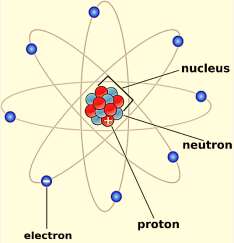
- Proton – Positively charged particle in the nucleus; relative mass 1, charge +1.
- Neutron – Neutral particle in the nucleus; relative mass 1, charge 0.
- Electron – Negatively charged particle outside the nucleus; relative mass ≈ 1/1840, charge –1.
- Nucleus – Central core containing protons and neutrons; most of the atom’s mass.
- Atomic number (Z) – Number of protons (= number of electrons in a neutral atom).
- Mass number (A) – Sum of protons + neutrons (nucleon number).
- Isotopes – Atoms of the same element with same protons but different neutrons.
- Electronic configuration – Arrangement of electrons in shells around the nucleus.
- Shell (energy level) – Region at a fixed distance from the nucleus where electrons move.
- Nuclide notation – Symbol showing mass number (top left) and atomic number (bottom left).
- Relative atomic mass (RAM) – Average mass of an atom relative to ¹⁄₁₂ of a carbon-12 atom.
- Valency – Combining power based on outer-shell electrons.
- Nucleons – Protons and neutrons in the nucleus.
1. Introduction to Atomic Structure
Atoms are the fundamental units that make up all matter. Understanding atomic structure helps scientists predict the behaviour of substances and design new materials.
Dalton’s Atomic Theory (1803)
Main assumptions:
- Matter is made up of tiny particles called atoms.
- Atoms can neither be created nor destroyed.
- Atoms of the same element are identical; atoms of different elements differ.
- Compounds form by combination of atoms in simple whole-number ratios.
Modern modifications:
- Atoms can be created or destroyed in nuclear reactions (fusion/fission).
- Some elements have isotopes (different masses).
- Atoms are made of sub-atomic particles.
- Atoms of different elements may combine in many ratios.
🧪 Let’s Explore Chemistry
Fun Fact: John Dalton (1766–1844) was colour-blind. His work on atoms began while he was studying the weather and the composition of the atmosphere!
2. Sub-atomic Particles
Discovery Timeline
| Scientist | Year | Discovery |
|---|---|---|
| J.J. Thomson | 1897 | Electron (plum-pudding model) |
| Ernest Rutherford | 1911 | Nucleus and protons (planetary model) |
| James Chadwick | 1932 | Neutron |
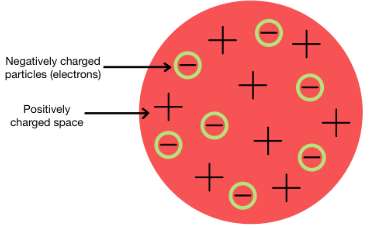
Properties of Sub-atomic Particles
| Particle | Symbol | Relative Mass | Relative Charge | Location |
|---|---|---|---|---|
| Proton | p⁺ | 1 | +1 | Nucleus |
| Neutron | n⁰ | 1 | 0 | Nucleus |
| Electron | e⁻ | 1/1840 | –1 | Shells outside nucleus |
🧪 Let’s Explore Chemistry
Breakthrough: Rutherford’s gold-foil experiment (1909–1911) showed that the atom is mostly empty space with a tiny, dense, positively charged nucleus. Most alpha particles passed straight through; a few bounced back – “as if you fired a 15-inch shell at a piece of tissue paper and it came back and hit you.”
Quick Check
Who discovered the neutron and in which year?
3. Electronic Configuration
Electrons occupy shells (energy levels) around the nucleus.
- 1st shell (K): maximum 2 electrons
- 2nd shell (L): maximum 8 electrons
- 3rd shell (M): maximum 8 electrons (for the first 20 elements)
- 4th shell (N): starts filling after the 3rd has 8
Electronic Configurations of the First 20 Elements
| Element | Symbol | Electrons | Configuration |
|---|---|---|---|
| Hydrogen | H | 1 | 1 |
| Helium | He | 2 | 2 |
| Lithium | Li | 3 | 2:1 |
| Beryllium | Be | 4 | 2:2 |
| Boron | B | 5 | 2:3 |
| Carbon | C | 6 | 2:4 |
| Nitrogen | N | 7 | 2:5 |
| Oxygen | O | 8 | 2:6 |
| Fluorine | F | 9 | 2:7 |
| Neon | Ne | 10 | 2:8 |
| Sodium | Na | 11 | 2:8:1 |
| Magnesium | Mg | 12 | 2:8:2 |
| Aluminium | Al | 13 | 2:8:3 |
| Silicon | Si | 14 | 2:8:4 |
| Phosphorus | P | 15 | 2:8:5 |
| Sulfur | S | 16 | 2:8:6 |
| Chlorine | Cl | 17 | 2:8:7 |
| Argon | Ar | 18 | 2:8:8 |
| Potassium | K | 19 | 2:8:8:1 |
| Calcium | Ca | 20 | 2:8:8:2 |
Stable atoms:
- Duplet – 2 electrons in outer shell (He)
- Octet – 8 electrons in outer shell (Ne, Ar)
🧪 Let’s Explore Chemistry
Amazing Phenomenon: The noble gases (He, Ne, Ar…) are extremely unreactive because they already have full outer shells. This “octet rule” explains why sodium (2:8:1) loses one electron and chlorine (2:8:7) gains one to form NaCl.
Quick Check
Write the electronic configuration of chlorine (atomic number 17).
4. Atomic Number and Mass Number
Atomic Number (Z)
- Number of protons in an atom
- Also equal to the number of electrons in a neutral atom
Mass Number (A)
- Sum of protons + neutrons
- Also called nucleon number
Nuclide Notation
Written as AZX
- Hydrogen: 11H
- Oxygen: 168O
- Potassium: 3919K → 19 protons, 20 neutrons, 19 electrons; config 2:8:8:1
Quick Check
An atom has mass number 49 and atomic number 24. Calculate the number of neutrons and electrons.
Electrons = 24 (neutral atom)
5. Isotopes
Definition: Atoms of the same element with the same number of protons but different numbers of neutrons (same atomic number, different mass numbers).
Examples of Isotopes
| Element | Atomic No. | Isotopes | Abundance |
|---|---|---|---|
| Hydrogen | 1 | 1H, 2H (deuterium), 3H (tritium) | 99.99%, 0.01%, rare |
| Carbon | 6 | 12C, 13C, 14C | 98.9%, 1.1%, trace |
| Chlorine | 17 | 35Cl, 37Cl | 75%, 25% |
| Oxygen | 8 | 16O, 17O, 18O | 99.76%, 0.04%, 0.20% |
Applications of Isotopes
- Carbon dating – Carbon-14 determines age of ancient objects.
- Medicine – Iodine-131 (thyroid), Cobalt-60 (radiotherapy), Technetium-99 (imaging).
- Agriculture – Phosphorus-32 tracks nutrient uptake in plants.
- Industry – Sodium-24 detects pipe leaks; tritium tracks water movement.
- Energy – Uranium-235 used in nuclear fission for electricity.
🧪 Let’s Explore Chemistry
Amazing Application: Carbon-14 dating has allowed scientists to date the Dead Sea Scrolls, ancient Egyptian mummies and prehistoric cave paintings with remarkable accuracy – all because a tiny fraction of carbon atoms are radioactive!
Quick Check
Why are isotopes of an element chemically identical but physically different?
6. Relative Atomic Mass (RAM)
Definition: The average mass of one atom of an element relative to ¹⁄₁₂ the mass of one carbon-12 atom.
Because most elements have isotopes, the relative atomic mass is rarely a whole number (e.g. chlorine ≈ 35.5).
🧪 Let’s Explore Chemistry
Why carbon-12? In 1961 scientists chose carbon-12 as the standard because it is stable, abundant and its mass is almost exactly 12.000. All other atomic masses are measured against it.
7. End-of-Topic Questions
Section A: Multiple Choice
- Which description corresponds to a proton?
A) Relative mass = 1, charge = +1
B) Relative mass = 1, charge = 0
C) Relative mass = 1/1840, charge = –1
D) Relative mass = 4, charge = +2 - What are nucleons?
A) Neutrons and electrons
B) Neutrons and protons
C) Electrons and protons
D) Protons, neutrons and electrons - Most atoms are neutral because they have:
A) Only neutrons in the nucleus
B) Equal numbers of electrons and protons
C) Neutrons with zero charge
D) The number of electrons balancing the number of protons - Isotopes of an element:
A) Contain the same number of protons but different numbers of neutrons
B) Have the same number of neutrons but different protons
C) Have different numbers of electrons
D) Have electrons added to the nucleus - The atomic number of element T is 9. Its electronic configuration is:
A) 2:4:3
B) 2:5:2
C) 2:7
D) 2:6:1 - The number of neutrons in an atom is calculated by:
A) Atomic number – Mass number
B) Mass number – Atomic number
C) Mass number + Atomic number
D) Atomic number × Mass number
Section B: Structured Questions
- Define the terms: (a) atomic number (b) mass number (c) isotope.
- An atom of element X has mass number 27 and atomic number 13.
(a) How many protons, neutrons and electrons does it have?
(b) Write its electronic configuration.
(c) Write its nuclide notation. - Explain why isotopes of the same element have similar chemical properties but different physical properties.
- List three applications of isotopes in everyday life or industry.
- Calculate the relative atomic mass of chlorine if 75% is 35Cl and 25% is 37Cl.
8. Suggested Answers
Section A
- A
- B
- D (or B)
- A
- C (2:7)
- B
Section B
-
(a) Atomic number = number of protons in the nucleus.
(b) Mass number = number of protons + neutrons.
(c) Isotopes = atoms of the same element with same number of protons but different numbers of neutrons. -
(a) Protons = 13, Neutrons = 27 – 13 = 14, Electrons = 13
(b) 2:8:3
(c) 2713X - Chemical properties depend on the number of electrons (especially outer electrons). Isotopes have the same number of electrons, so similar chemistry. Physical properties (mass, density, melting point) depend on mass; different numbers of neutrons give different masses.
- Any three: carbon dating (C-14), medical imaging/treatment (I-131, Co-60, Tc-99), detecting pipe leaks (Na-24), tracking plant nutrients (P-32), nuclear energy (U-235).
- RAM = (35 × 75 + 37 × 25) / 100 = (2625 + 925) / 100 = 3550 / 100 = 35.5
🧪 Let’s Explore Chemistry – Final Thought
Everything you can see, touch or smell is made of atoms – tiny solar systems of protons, neutrons and electrons. Understanding their structure is the first step to understanding the entire material world.
Ready for Chapter 2: Periodic Classification?
Continue Form Two Chemistry in the Click Online Academy app, with all five chapters in your pocket.
Click here to continue learning on our app